
The production of packaging bags is a multi-step, precision process that combines various technologies. It primarily involves core工序 (processes) such as printing, lamination, curing, slitting, and bag making. Each step is crucial and directly affects the final product’s aesthetics, functionality, and quality.
1. Printing
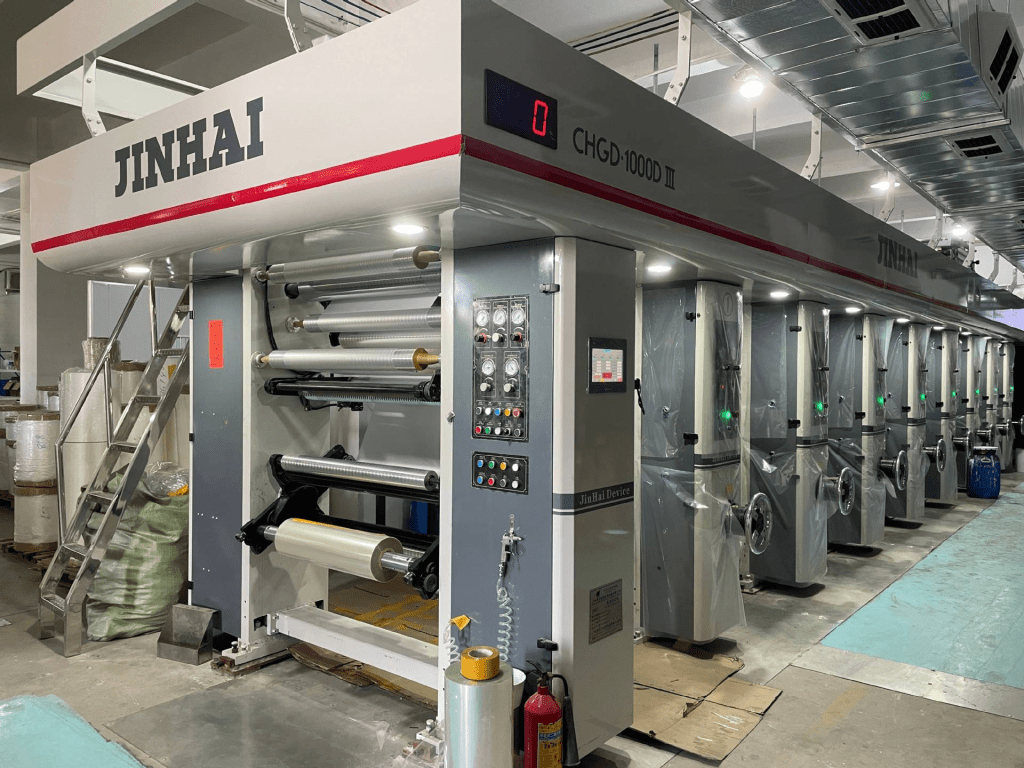
Printing is the first step that imparts designs, brand logos, and product information onto the packaging bag, making it the most visual aspect. The most mainstream printing method in the flexible packaging industry is Gravure Printing.
- Operational Method:
- Pre-press: Based on the customer-approved design, gravure printing cylinders (plates) are produced. Each color requires a separate cylinder, whose surface is etched with countless tiny ink cells (engraved wells).
- Mounting Plates: The produced cylinders are installed onto the respective printing units of the press. Common presses have 8, 10, or even more color stations to handle complex designs.
- Ink Mixing & Supply: Specialized inks are poured into ink trays. A doctor blade scrapes excess ink from the non-image areas of the cylinder surface, leaving ink only in the cells.
- Registration: The substrate (e.g., BOPP film, PET film) passes through each color station. Each cylinder transfers its color of ink onto the film sequentially. A precise optical registration system ensures the colors align accurately without misalignment.
- Drying: After each color is applied, the film passes through a high-temperature oven to rapidly evaporate the solvents in the ink, ensuring it is completely dry before the next color is applied. This prevents color smudging and blocking (transfer of ink between layers).
- Characteristics: Gravure printing offers rich, saturated colors, excellent image detail, good rub resistance, and is ideal for very long print runs.
2. Lamination

Lamination is the process of firmly bonding two or more films with different properties using adhesives. This is the key step for achieving the functional properties of the packaging bag, such as barrier properties (against oxygen, moisture), aroma retention, puncture resistance, and heat-sealability.
- Operational Method (using Dry Lamination as an example):
- Coating: A specialized adhesive is applied evenly to the surface of the first substrate (usually the printed film) using a gravure roller.
- Drying: The coated film passes through an oven to completely evaporate the solvents from the adhesive, leaving behind a dry adhesive layer.
- Bonding: The dried film is combined with the second substrate (e.g., aluminum foil, CPP, PE) under heat and pressure applied by a heated steel roller and a rubber nip roller.
- Cooling & Winding: The laminated material is cooled on chill rolls to set the bond and then wound into a large roll.
- Other Methods: Other lamination methods include solventless lamination (more environmentally friendly) and extrusion lamination (where molten PE is extruded as the bonding agent).
3. Curing (Aging)
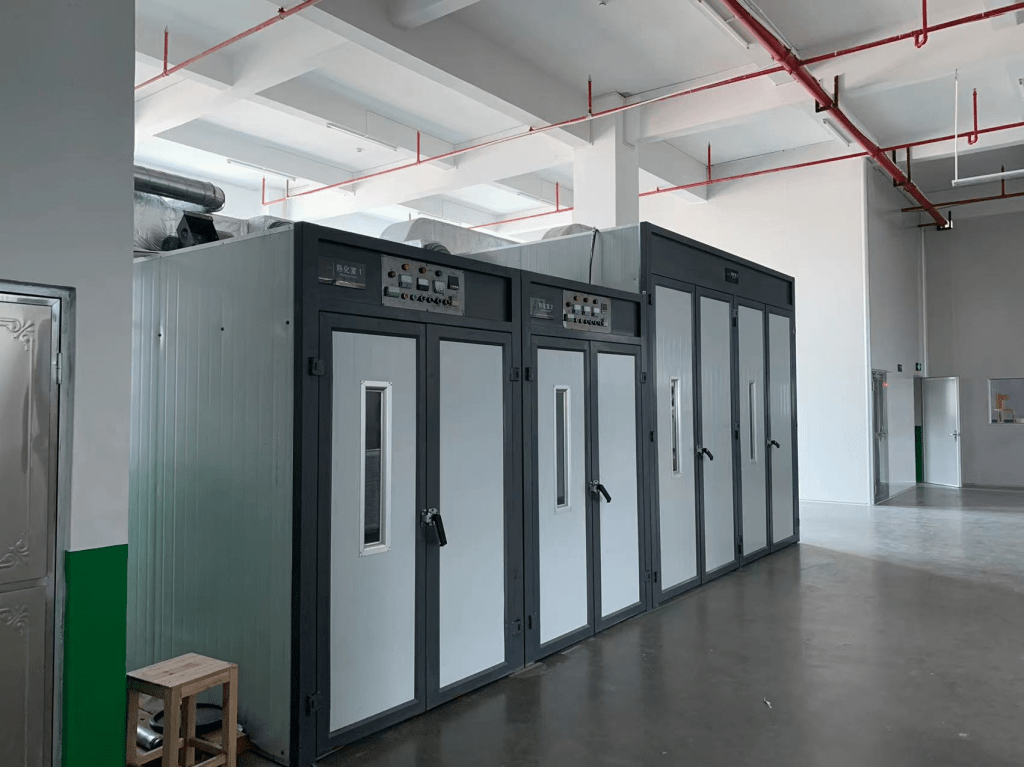
After lamination, the rolled material cannot proceed immediately to the next step; it must be cured in a curing room.
- Operational Method: The laminated roll is placed in a curing room at a specific temperature and humidity for 24-48 hours.
- Purpose: This allows the adhesive to fully undergo its chemical reaction, achieving its final bond strength and ensuring the layers are firmly bonded to prevent delamination later.
4. Slitting(This step is not required for every product)
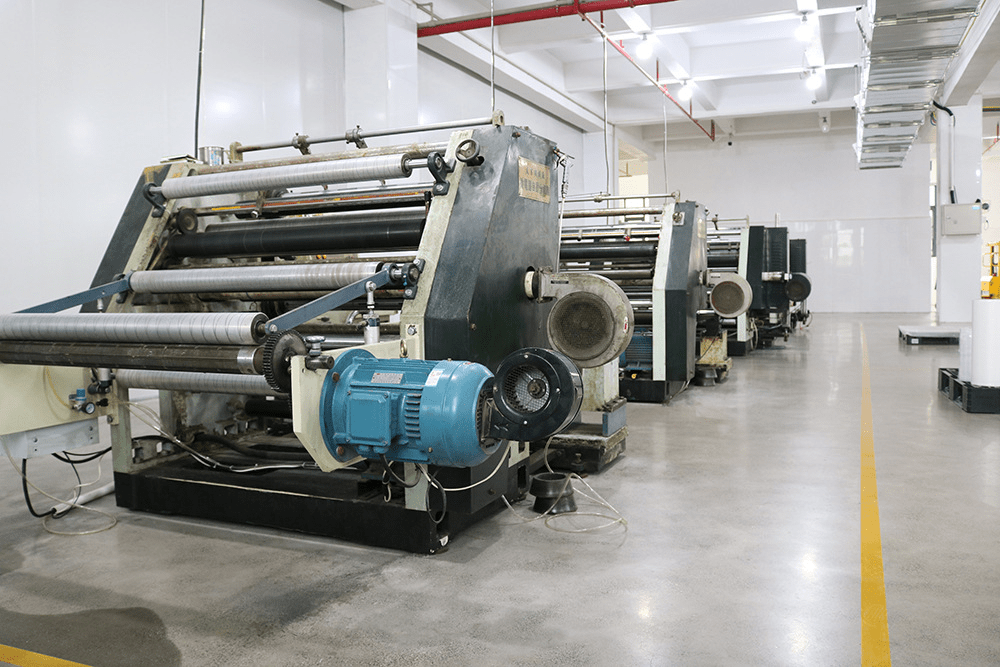
After curing, the large master roll needs to be cut down to the required width for bag making.
- Operational Method: A slitting machine cuts the wide master roll longitudinally into multiple narrower rolls of consistent width, as required by the bag-making machine. This process must ensure clean, even edges without burrs.
5. Bag Making
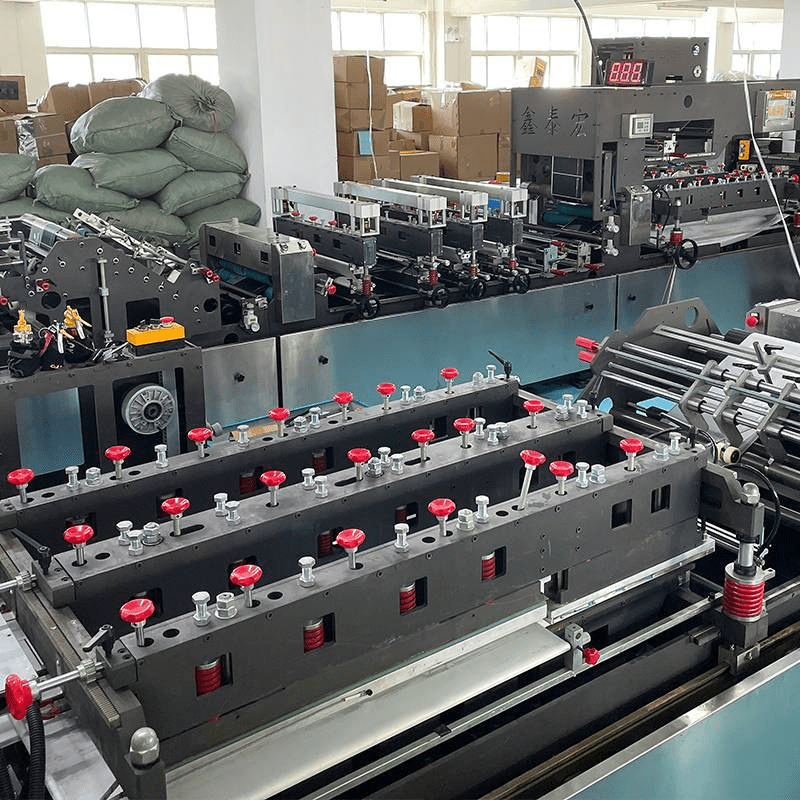
This is the final step where the film roll is formed into finished packaging bags.
- Operational Method:
- Loading & Registration: The slit roll is mounted onto the bag-making machine. The equipment is adjusted to ensure the design is positioned correctly on the bag (using eye-spots or registration marks for tracking).
- Heat Sealing: The bag-making machine uses heated sealing jaws to apply heat and pressure at pre-set locations. This melts the heat-seal layer (usually the inner PE or CPP layer), bonding the films together to form the side seals and bottom seal of the bag.
- Punching & Cutting: Operations like adding handle holes, tear notches, or perforations are performed if needed. Finally, a cutting blade separates the continuous tube of bags into individual ones.
- Counting & Packaging: The finished bags are counted automatically and stacked. They then undergo quality inspection before final packaging.
In summary, the manufacturing of packaging bags is an interlinked process: Printing gives it its soul (appearance), Lamination gives it its body (structure/function), Curing makes it strong and stable, and Slitting and Bag Making finally give it its shape. Meticulous control at each stage is essential for producing high-quality packaging bags.
 Packaging Expert
留下评论