Easy-to-understand guide for product selection
1. Basic Introduction & Common Types
PE (Polyethylene, recycling code #2 / #4)
Made from polymerized ethylene. It features soft texture and flexible molecular chains, making it the most widely used film material for packaging. Its mainstream grades for bags include:
- LDPE (Low Density PE): Super soft, slight haze, gentle heat seal. Widely used for plain bags and cling wrap.
- LLDPE (Linear Low Density PE): Excellent tear, puncture and stretch resistance. Ideal for heavy-duty packaging, stretch wrap and frozen food inner layers.
- HDPE (High Density PE): Stiffer, milky opaque, great moisture barrier. Used for supermarket carry bags and industrial lining bags.
PP (Polypropylene, recycling code #5)
Made from polymerized propylene with neat molecular structure and a much higher melting point. Two primary film forms for packaging:
- BOPP (Biaxially Oriented PP): Top choice for printed outer layers. Crystal clear, rigid and scratch-resistant, but cannot self-seal.
- CPP (Cast PP): Functional heat-sealable inner film. Modified RCPP grade withstands high-temperature retort sterilization, while regular CPP turns brittle in cold environments.
2. Core Property Comparison Chart
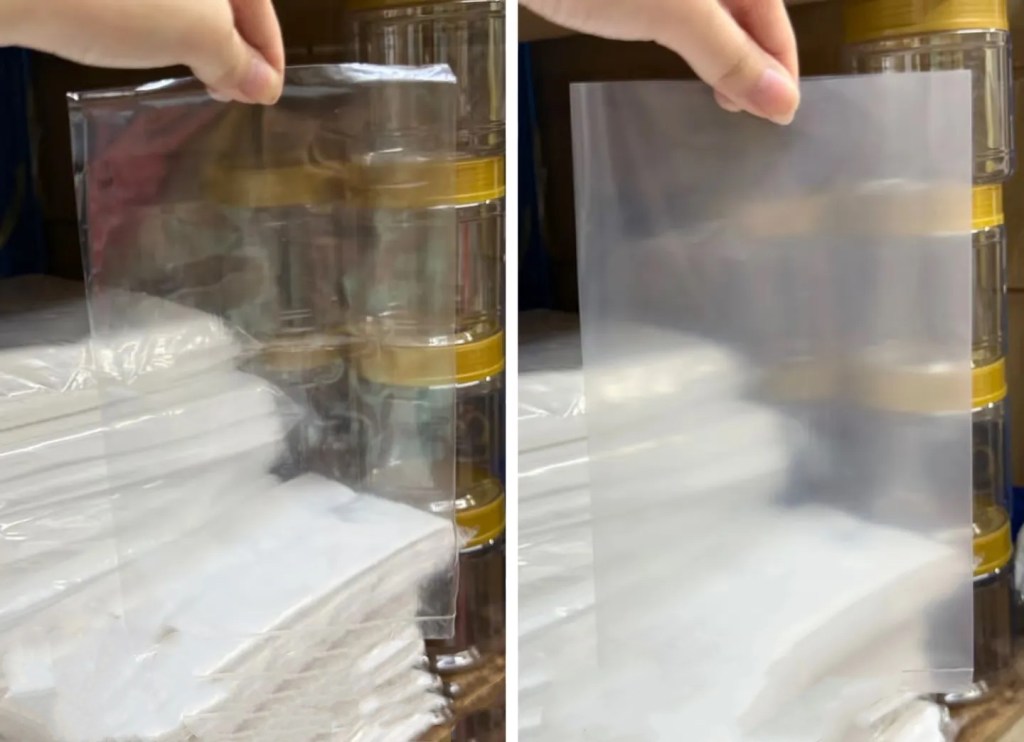
The left side with crystal clear finish is PP, while the hazy right side is PE.
| Comparison Item | PE (LDPE / LLDPE / HDPE) | PP (BOPP / CPP / RCPP) | Key Takeaway for Buyers |
|---|---|---|---|
| Temperature Resistance | Continuous use ≤80°C; short peak temp 90–110°C. Remains flexible down to -70°C with no cracking | Regular CPP stable up to 100°C; RCPP handles 121°C retort. Becomes brittle below 0°C, easy to split under -10°C | Pick PP for high-heat cooking packaging; choose PE for frozen cold chain goods |
| Melting Point | LDPE melts at 105–112°C | PP melts at 160–167°C, far more heat-resistant | PP outperforms PE completely under high temperatures |
| Texture & Rigidity | Waxy, soft touch, crinkles quietly, bags sag easily | BOPP firm, glossy and crystal clear for neat shelf display; CPP softer yet stiffer than PE | PP is better for retail display pouches and self-adhesive bags |
| Clarity & Gloss | LDPE semi-transparent with visible haze; HDPE opaque white | BOPP delivers glass-like transparency and high gloss for premium printing effects | High-end transparent retail packaging relies on BOPP |
| Mechanical Toughness | Outstanding low-temperature impact, puncture and stretch resistance; LLDPE resists tearing best | Strong at room temperature, but fragile when cold. Turns white after repeated bending | PE is superior for cold storage and sharp, heavy contents |
| Heat Sealing Performance | Wide sealing window (110–150°C). Tolerates grease and residue, seals tight even with food stains; rarely burns through during low-temp sealing | CPP seals at higher 130–170°C; RCPP stays intact under retort heat. Grease residue easily causes weak, leaky seals | PE inner layers for sauces & frozen food; RCPP inner layers for high-temperature cooked meals |
| Water Vapor Barrier | HDPE offers decent moisture resistance; LDPE moderate performance | Overall better moisture barrier than standard PE; BOPP blocks moisture better than LDPE | PP works better for dry goods requiring long shelf life |
| Oxygen Barrier | Ordinary PE lets oxygen pass through easily, only basic fresh-keeping function | BOPP blocks oxygen better than LDPE; extends shelf life without aluminum lamination | Dry snacks usually use BOPP composite structures |
| Chemical Resistance | Resistant to weak acids, alkalis and salt water; compatible with mild oils | Better chemical stability against grease, acid and alkaline solutions. Perfect for oily cooked food | PP resists oil penetration longer for marinated & fried food |
| Density | 0.91–0.96 g/cm³ | 0.89–0.91 g/cm³, the lightest mainstream packaging plastic | PP uses less raw material for the same bag thickness |
| Cost | Low-cost general LDPE; mid-range price for LLDPE & retort PE | Affordable BOPP printing film; premium RCPP retort material costs more than standard PE | PE delivers better value for daily low-cost packaging |
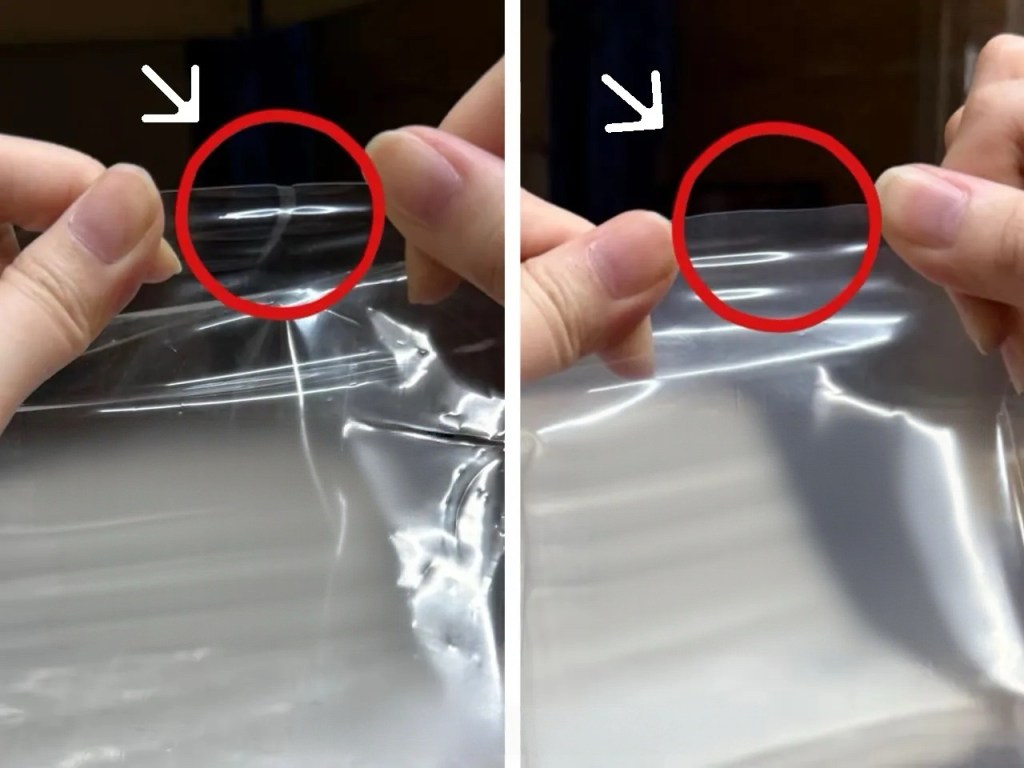
The left one is PP: high stiffness yet prone to cracking under cold or sharp impact.
The right one is PE: excellent toughness and hard to tear even when stretched hard.
3. In-depth Functional Comparison for Packaging Needs
Cold Resistance for Frozen Goods
Strengths of PE: Flexible molecular chains stay elastic even at -70°C. Standard material for frozen dumplings, chilled meat, seafood and long-distance cold transport bag inner layers. PA/PE composite vacuum bags are industry standard—no splitting when dropped or folded after freezing. Weakness of PP: Standard homopolymer PP loses flexibility sharply below freezing, cracking instantly under force at 0°C. Modified copolymer PP slightly improves cold performance but pushes up costs, rarely used for standard -18°C frozen packaging.
High-Temperature Retort & Microwave Safe Packaging
- PP RCPP retort film advantages: Maintains shape without delamination or chemical leaching under 121°C high-pressure sterilization. The dominant inner layer choice for ready meals, braised meat retort pouches and microwave-safe food packaging with reliable food safety.
- Limitations of retort PE: Modified heat-resistant PE only survives boiling below 110°C, unable to pass 121°C sterilization. It softens easily under prolonged heating, leading to seal leaks for soup-rich food, only suitable for short-time low-temperature boiling products.
Printing & Retail Display Performance
- BOPP (PP stretched film): Ultra-smooth glossy surface with top transparency. Gravure printing shows vivid, true-to-life colors without haze. Widely used for clothing self-adhesive bags, candy pouches and cosmetic outer packaging, standing upright neatly for attractive shelf display. Note: It cannot form seals alone and must laminate with CPP or PE inner layers.
- PE film: Visible haze dulls printed graphics, bags lack stiffness and collapse easily. Mainly used for industrial liners and basic fresh produce bags, rarely selected for premium printed retail packaging.
Puncture Resistance for Heavy, Sharp Contents
- LLDPE composite film: Unmatched stretch, tear and puncture resistance. Ideal for rice sacks, industrial particle liners, heavy-duty courier bags and vacuum packaging for bone-in meat—sharp bones seldom pierce the bag.
- PP film: Acceptable puncture resistance at room temperature, yet turns brittle when cold. Risk of rupture when packing heavy goods with sharp edges in low-temperature environments.
Moisture & Fresh-Keeping Barrier
- Dry snacks, tea and biscuits: PET/BOPP composite (BOPP outer layer) blocks water vapor and oxygen better than pure PE, extending shelf life significantly.
- Watery fresh produce & sauce products: PE inner layers perform slightly worse on barrier, yet offset this weakness with grease-resistant sealing and cold toughness for secure long-term storage.
Oil Resistance for Oily & Marinated Food
PP molecules carry low polarity, resisting oil penetration and swelling. Braised snacks, fried treats and sauces won’t leak oil to stain printed outer layers even after long storage.
PE slowly swells after prolonged contact with high-oil food, causing oil seepage and weak sealed edges over time.
Heat-Sealable Inner Layer Options
- PE inner film (LDPE / LLDPE) best fits: Frozen food, chilled meat, bone-in vacuum packaging, sauce & soup products. Compatible with low-temperature sealing production lines, forming tight seals even with grease residue. Also used for low-cost plain bags and courier sacks.
- CPP / RCPP inner film best fits: High-temperature retort cooked food, microwave-ready ready meals, sterilized meat retort pouches. Great for high-oil nuts & dry snacks with superior moisture lock. Matches BOPP outer layers to produce three-side seal and stand-up food pouches.
4. Full Application Breakdown for PE & PP Bags
All PE Film Packaging Applications
- LDPE bags: Supermarket fresh produce bags, fruit & vegetable pouches, simple clothing inner liners, bubble film composite and industrial moisture-proof liners. Soft surface prevents scratches on delicate goods.
- LLDPE film: Inner layers of frozen vacuum bags, pallet stretch wrap, heavy courier bags, bone-in poultry packaging and raw material industrial liners with strong anti-tear & anti-puncture performance.
- HDPE film: White supermarket shopping bags, trash bags, chemical powder liners and laundry detergent packaging, light-proof and wear-resistant.
- Modified retort PE: Short-time boiling sauce pouches under 100°C, budget alternative to RCPP but not fit for high-heat sterilization.
All PP Film Packaging Applications
- BOPP stretched film (printed outer layer): Clothing self-adhesive OPP bags, candy & biscuit three-side seal pouches, mask outer packs, gift and jewelry packaging. Delivers premium crystal-clear display effect. Cannot form sealed bags alone.
- Standard CPP cast film (composite inner layer): Room-temperature pastry and dry food composite bag inner layers, better moisture resistance than PE.
- RCPP retort cast film (high-heat exclusive): Inner layer for 121°C retort pouches, ready meal soft cans and microwave heatable meat packaging.
- Modified copolymer PP blown bags: Bread storage bags, regular fruit & vegetable fresh pouches and disposable wrap. Only for room-temperature use—never for frozen storage.
5. Practical Material Selection Tips for Buyers
- Frozen seafood, chilled meat & deep-frozen food → Choose PE inner layers (PA + LLDPE composite). Avoid standard CPP, which splits easily under freezing temperatures.
- Retort sterilized food, microwave ready meals & braised meat soft cans → RCPP retort PP inner layer only. Standard PE softens and leaks under high heat.
- Premium transparent retail packaging, clothing self-adhesive bags & snack outer pouches → BOPP outer layer laminated with CPP inner layer for best visual sales effect.
- High-oil fried snacks, spicy strips & room-temperature braised food → BOPP + CPP composite, PP material prevents oil leakage.
- Bone-in, sharp-edged or heavy-weight packaging → LLDPE composite PE film, superior anti-puncture & anti-tear performance compared to PP.
- Low-cost general shopping bags, basic fresh produce pouches & industrial liners → LDPE / HDPE for cost efficiency.
- Products requiring both frozen cold chain and high-temperature heating: Multi-layer composite construction recommended: outer BOPP / PET, middle nylon barrier layer, inner modified cold-resistant retort PE to balance both extreme temperature needs.
6. Final Quick Selection Guide
Choose PE if you need:
Top-tier cold resistance, flexible anti-puncture toughness, wide-range stable performance, grease-tolerant heat sealing. Perfect for frozen & cold chain products. Drawbacks: Poor heat resistance, visible haze and less attractive shelf appearance.
Choose PP if you need:
High heat resistance for retort & microwave use, crystal clear rigid display, better moisture & oil barrier, bright printing effect for retail shelves. Drawbacks: Brittle in freezing temperatures, sensitive to grease during sealing, not fit for cold chain transport.
Most modern flexible packaging avoids single-material bags. The mainstream solution is BOPP (PP outer layer) laminated with PE or CPP inner layers, combining the strengths of both materials while offsetting their weaknesses, suitable for nearly all food, daily chemical and industrial packaging demands.

